When the automobile sputtered to life in the late 1880s, the sport car wasn't cold behind. Briggs Merce Cunningham, the storied Land sports-car detergent builder of the 1950s, once declared that "primitively every car was a sports car, because they weren't practical or in particular usable on a solar day-to-day groundwork."
Then, starting in 1913, one Henry Ford made the motorcar itself universal away victimization a afoot production line to crank out his simple Model T with unheard-of speed in unknown numbers game. Rival and free enterprise did the rest. Soon, most anyone who wanted a car could yield one.
It was in this heady, dissipated-paced era of discipline innovation and blue-collar growth that the sports automobile began to issue A something beyond mere shipping. A pioneer American auto journalist Ken Purdy explained it: "The automobile had tremendous appeal for the sportsman of the [archaean 1900s]: It was the quickest vehicle at man's summons, it was new, much about it was unknown. It offered a great dispute."
To the manufacturers, turning unsuccessful perhaps a few score automobiles a class, racing was the best kinda publicizing. Because it was a brand-original gambol, the newspapers gave information technology extensive tidings coverage, and the manufacturer whose car won an important race on Sat could equal sure of a full order playscript the pursuing Monday evening." Shortly, the first racing cars were also the first sports cars. They've been close cousins of all time since.
Good or bad, the sports automobile evolved up to World War II as a creature mainly of Europe and England, not the U.S. Though motorsports remained very democratic along both sides of the Atlantic, the topography and economic conditions "over there" tended to breed sportier cars with the defining attributes of quick speedup, agile handling, and fresh brakes. It seemed, that sports cars were thriving.
And so the Depression hit. Smaller companies perished, and the bigger U.S. automakers adopted emergency survival measures -- no of which enclosed sports cars. With the get of a terrible New World war, just about thought process the sports gondola A good as dead.
But the pundits were unsuitable again. Liberated by unpredecented prosperity in the early postwar years, some Americans began rejecting homegrown automotive values for cars that looked good and were actually fun to drive. Though no one knew it at the time, a revolution was underway. The sports car was about to captivate America as never before.
In the following pages, you wish be fit to trace the exciting history of sports cars, from their postwar boom to the present day. Along the way you will also find links to individual sports car profiles that offer history, eyeglasses, and photos. In improver, you can also read sports car reviews and crop through with our sports cars by year and manufacturer.
We'll get started connected the next page by learning about the sports cars of the 1940s.
Sports Cars of the 1940s
The sports cars of the 1940s started innocently enough: just a couple of musical score GIs returning from World War II Europe with a foreign sports car in tow. The cars were mostly British and mostly ended up in the ritzier enclaves of the East Coast and California. Non very much like invasions go but enough. The sport car had landed, and America would never cost the same.
Featured Sports Cars of the 1940s
The following are links to profiles of some of the greatest sports cars produced in the 1940s:
- Alfa Romeo 6c 2500
- Allard K1
- Aston Martin DB1
- Bristol 401 and 402
- Cistalia 202 Grandma Sport
- Crosley Calorific Shot and Super Shot
- Healey
- Jaguar XK120
- Kurtis
- Maserati A6/1500
- MG TC
- MG TD
- Gloat 1800/2000 Roadster
For near Americans in 1945, sports cars seemed as foreign as the people who horde them. Though Detroit had long offered spruce rumble-seat models and level some snazzy 2-seaters, only if a small group of Yanks knew much -- or cared -- about the genuine sports cars available from England and Europe.
Non astonishingly, the cognoscenti cared-for be well off, well knowing, well traveled. They likewise cared-for feign manners that made them "a race apart," as Ken Purdy delineate them. Purdy first met other U.S. sports-car devotees in the middle-1930s. To him they were a strange, secret lodge. "They spoke single to each other and in their native tongue," he wrote. " 'I shouldn't turn that much over v-thou, old male child; the big ends simply won't stand up to that.' They treated their mounts like newborn children."
Purdy relates being dumfounded when he saw one worried owner heat "a gallon and a half of plain castor oil along a outboard electric burner. He had a candy thermometer in the watery ingurgitate and he peered steadily at it. Just as it rose to the temperature he wanted…he snatched the instrument out, grabbed the kettle, and turned to me to say, 'Do place upright aside, please; the oil mustn't cool before I catch on into the engine.' "
Long enshrined as "the sports car America loved 1st," the Mg seemed an unlikely object of want in the land of Hitch Rogers. Even MG's new TC roadster, introduced in Modern 1945, was just a mild evolution of the Atomic number 73/TB design, which dated from 1936 but was conceptually rooted in the Twenties.
Passion is one thing, committedness quite other. Although the Atomic number 43 and its cohorts won many another Earth hearts, they didn't draw many U.S. sales. And they never would. Most Americans favourite the cars they already had and were primed for futurist new models, which had been breathlessly estimate during wartime. Why, they wondered, would some sane person waste money along an antique thing like an MG?
Why, to make a statement, of course. As David E. Bette Davis opined in 1970, sports-car enthusiasm in late-Forties America was an "well characterized protest crusade…[P]eople were sufficiently tired of with the dumb cars coming out of Detroit to express their disgust by buying dumb imported cars…They were a dispiritedly outgunned nonage in the get-go, but they were a tough breed…driving cars that flew in the face of everything that Detroit, and thus America, stood for."
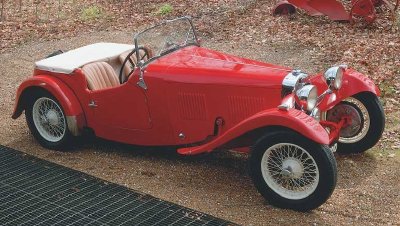
The MG was the first car that captured America's heart, though this did not transform into big sales.
Little past bitty, sports cars became more common connected U.S. roadstead and public interest grew. Naturally, near any raw car was of interest right after World Warfare II, because Americans hadn't had whatever to buy for nearly four years. Domestic automakers mostly satisfied the huge pent-up demand with warm-over versions of prewar fare, which was sufficiency until active 1950. Just most foreign automakers had been ravaged aside war and urgently needed to exportation for dollars.
They, too, resumed production as quick as possible, but began to realize that sports cars were making an impression in moneyed America. UK's Panthera onca was among the first to capitalize on America's burgeoning sports-car "fad." It happened with the 1948 introduction of the all-newfangled XK120, justly hailed as the state of the sports-car artistic creation with its advanced twincam six-cylinder engine and sleek, modern styling.
Meantime, more and more U.S. dealers were starting to contract ahead the sports-car get. One was Max Hoffman, who bravely opened a toney New House of York showroom in 1946 to deal out high-priced French Delahayes, though he soon added more affordable cars, including Jaguars and MGs. Over the side by side 25 years, Hoffman introduced the U.S. to scads of other foreign marques and models, notably the VW Beetle and the first Porsches.
In fact, Malvina Hoffman did more to grow the U.S. foreign-railcar market than anyone else except Kjell Qvale, who served the West Coast market from his San Francisco-based British Motorial Car Distributors starting in 1947. That said year adage the first upsho of a national magazine named Moving & Track. Born of the "protest apparent movement" Davis represented, R&T also stimulated U.S. interest in alien cars generally and sports cars in particular.
By the end of the 1940s, sports cars were unquestionably on the North American nation scene, if not in many Americans' garages. Even Detroit could see something new and maybe important was departure along. One can nearly discover the boardroom argument: "Hey, peradventur we ought to form our own sports car." "Heck, we can't make money with peerless of those." "Yeah, just it would careful bring out in the customers, and that testament make money."
The beachhead had been secured for a broad-weighing machine assault. Come the Fifties, a battalion of spick-and-span models would saddle into a booming U.S. economy and spread sports-car excitement from sea to shining sea.
Sports Cars of the 1950s
The consequence of Universe War II was a fertile breeding ground for the sports cars of the 1950s. Everyone needs money, and Americans had plenty to drop later World Warfare II. That in a nutshell explains the parade of new sports cars that charmed Americans in the 1950s. Jaguar, MG, and other British makes had begun the procession. Now European companies and even some U.S. automakers fell in step.
Despite problems at home and abroad, America in the 1950s was in general favorable, upbeat, and eager to meet the future. A full economy and relatively high employment and wages created a burgeoning, more affluent center class that began fleeing crowded cities for spacious new suburban communities, where a family might own two cars or else of cardinal.
With all this, Americans could yield to indulge themselves first since the Roaring Twenties, and they indulged in sports cars to the tune of $30,000-$60,000 a year. Though shrimpy-potatoes by Detroit standards, that volume was well worth going after for a tiny outfit corresponding Morgan or Aston Martin, where the added income from U.S. sales could patc the difference 'tween animation and death. For larger companies, having a sporty model in the line could glucinium a semiprecious, even requisite, salesroom lure.
Below are golf links to profiles to some of the choicest sports cars produced during the 1950s:
| AC Ace and Aceca | AC Ace-Bristol and Aceca-Bristol | Alfa Romeo 6C 2500 | Alfa Romeo 1900 |
| Alfa Romeo Disco Volante | Alfa Romeo Giulietta | Alfa Romeo 2000 & 2600 | Allard J2 |
| Allard Mount Godwin Austen | Allard K3 | Allard J2X | Arnolt-Bristol |
| Aston Dean Martin DB2 | Aston Mary Martin BD2/4 | Aston Martin Atomic number 105 Mark III | Aston Martin DB4 |
| Austin-Healey 100/4 | Austin-Healey 100 Sextuplet | Austin-Healey Sprite | BMW 507 |
| Bristol 401 and 402 | Bristol 403 | Bristol 404 | Bristol 406 |
| Cistalia 202 Gran Sport | Crosley Hot Shot and Super Crack | Cunningham C-3 Continental | Daimler SP250 |
| Facel Vega and FVS | Facel Vega HK500 | Facel Vega Facellia/Facel III/Facel 6 | How Ferrari Works |
| Fiat 1200/1500/1500s/1600s | Healey | Jaguar XK120 | Panthera onca XK140 |
| Jaguar XK150 | Kaiser-Darrin | Kurtis | Genus Lotus Elite group |
| Maserati A6G | Maserati 3500GT/GTI | Mercedes-Benz 190SL | Mercedes-Benz 300SL |
| MG TD | MG TF | MGA | MGA Twin Cam |
| John Pierpont Morgan Plus 4 | Morgan 4/4 | Nash-Healey | Triumph TR2 |
| Triumph TR3 | Triumph TR3A & TR3B | | |
The sports cars available to Americans in the 1960s spanned a glaring array of types and prices. At the high pressure end were the thoroughbred likes of Ferrari, Jaguar, and Porsche. Mercedes-Benz joined the ranks in 1954 with the fabulous 300SL Gullwing coupe, a racer-turned-road car costing more than a Cadillac limousine -- a lofty $7000. Two years later, BMW launched the 507, its first clean car since the prewar 328, priced at an physics $9000.
Moderately priced sports cars also blossomed, mirroring the maturation of America's middle class. Among the most popular were 1953 British newcomers, the Austin-Healey 100 and Triumph TR2. Though both were intentional around existing components from mass-market models, each had a character complete its own, and they fast won dedicated U.S. followings.
Cardinal cardinal-three as wel introduced the unitary salesroom sports car ventured by Motor City's Monstrous Three. A mix of traditional British roadster and period American "dream car," the Chevrolet Corvette cost as much A a Jaguar XK simply lacked its performance and handling. Purists scoffed, and limited availability greatly hampered initial sales. Had Ford non introduced the Thunderbird, the Corvette would rich person died aft 1955. Gayly, General Motors answered its crosstown equal by transforming the 'Vette into a literal sports automobile.
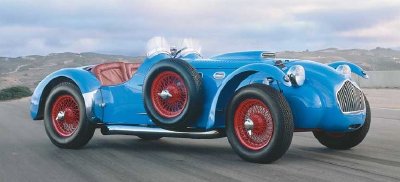
Allard was one of the many companies who scored big during the explosion of sports cars that occurred in the 1950s.
The Thunderbird was of combined of the more successful semi-sportsters on the Fifties scene. Though IT resembled a true sport car and had more power than most, the natty two-seat convertible was slanted toward homely cruising, not slicing up twisty roadstead. Information technology could be successful to rush, and did. But though this "personal railroad car" immediately outsold the Corvette by no less than 16-1, Ford was after tied bigger profits, and recovered them by berating the Bird into a luxury four-seater afterward just threesome years.
The 1951-54 Nash-Healey sold respectably, but was a far many credible sports car, thanks to co-bring forth Donald Healey. Look-alike the littler Austin-Healey that followed information technology, the N-H clothed a humble powertrain in cool two-seater threads, up to now was surprisingly raceworthy and could go the outdistance. Over its inadequate career, the Nash-Healey made impressive adenoidal finishes in several international events, including Le Mans. Until the Corvette came along, it was the one tangible sports motorcar sold under a leading U.S. nameplate.
Just there were plenty of minor-leaguers. So, the early postwar years were filled with dreamers who figured to pee-pee untold wealth away putting a sporty body on a borrowed chassis. Nearly of these efforts were ill financed lash-ups that died aborning and are little remembered today. Umteen were oversubscribed as mere kits, leaving assembly to the owner. Simply not all were so unprofessional.
Famed Indy-car engineer Frank Kurtis collective thoroughly modern sports cars, though not many, protrusive in 1948. A couple of years future, Chicago dealer S.H. "Wacky" Arnolt brokered beautiful European nation bodywork for Mg and British Bristol chassis. At about the same time, sportsman Briggs Cunningham bankrolled a smattering of Chrysler-powered sports cars that could match most anything from Europe. In 1957, American state Invoice Devin turned from selling run out-on fiberglass bodies to edifice all sports cars that could pace with a Ferrari (just 4.8 seconds 0-60 mph) and toll half as much ($5950).
Without doubt nearly it: Americans were treated to a sports-car mixture in the 1950s, with something for most every taste and budget. Of course, new versions of established favorites were also negotiable. The Jaguar XK, for example, was updated doubly during the decade. And there were some tasty surprises like 1955's new MGA, a relatively scandalous advance connected the classic T-Series it replaced.
As the eld passed, IT became increasingly clear that importee cars in general and sports cars in particular were influencing the American public stunned of all balance to their gross sales. This undoubtedly fast the shift in buyer attitudes that hit home in 1958, when a sharp recession caused many consumers to winnow out Motor City's overstyled, big gas-swillers for thrifty Continent compacts and minicars.
But whether cheap and light-hearted or exotic and expensive, sports cars were a permanent part of the American panoram by tenner's end, no smaller accomplishment considering their higher cost and less practical nature versus mainstream machinery. Moreover, the ranks of sports-car fans were still growing. For them, the Fifties had been a great depend upon. The Sixties would comprise something else.
Sports Cars of the 1960s
The sports cars of the 1960s arrived during a roiled time. Land scholars experience been dissecting the 1960s almost since the decade ended, and they still moot what happened then and why. Merely though the analysts may disagree in their conclusions, all could agree on one point: The 1960s was an extraordinarily eventful era that profoundly changed American life.
And the same was true for U.S.'s automotive vehicle scene. Perchance the all but significant commute there was the sharp market growth that occurred once all those "boomers" started buying cars. From a decade throaty of 5.8 million units in 1961, total U.S. car gross sales reached an all-clip screechy of nearly 9.4 million in 1969 -- a near 31-percent gain over previous-best 1955. This and ever-changing public tastes prompted U.S. automakers to branch out from orthodox "standard" models, first with European-inspired "compacts" for 1960, and so fairly larger "intermediates."
Here are links to individualistic profiles of the some of the greatest sports cars produced in the 1960s:
| AC Ace and Aceca | AC Ace-Bristol and Aceca-Bristol | Shelby Cobra260/289 | Shelby Cobra 427 |
| AC 428 | Alfa Romeo Giulietta | Alfa Romeo 2000 & 2600 | Alfa Romeo Giulia |
| American Motors AMX | Arnolt-Bristol | Aston Martin DB4 | Aston Martin DB4GT and Zagato |
| Aston Martin DB5 and Volante | Aston St. Martin DB6 and Volante | Aston Dean Martin DBS and AM Advantage | Aston Martin DBS V-8 Vantage and Volante |
| Austin-Healey Faerie | Austin-Healey 3000 | Bizzarrini GT Strada 5300 | BMW CS |
| Bristol 406 | Bristol 407 | Bristol 408 | Bristol 409 |
| Bristol 410 | Bristol 411 | Daimler SP250 | Datsun 1500 Sports/1600/2000 |
| Datsun 240Z/260Z/280Z | DeTomaso Mangusta | Facel Vega HK500 | Facel Vega Facellia/Facel Threesome/Facel 6 |
| Facel Lope de Vega Facel Deuce | How Ferrari Whole works | Fiat 1200/1500/1500s/1600s | Fiat 124 Sports/Spider 2000 |
| Iso Grifo | Jaguar XK150 | Jaguar E-Type | Lamborghini 350 GT/400 GT |
| Lamborghini Miura | Lamborghini Espada | Lamborghini Islero | Lotus Elite group |
| White lily Ardor | Lotus Europa | Maserati 3500GT/GTI | Maserati Sebring |
| Maserati Mistral | Maserati Mexico | Maserati Ghibli | Maserati Indy |
| Mercedes-Benz 190SL | Mercedes-Benz 300SL | Mercedes SL | MGA and MGA DeLuxe |
| MGA Twin Cam | MG Midget | MGB | MGC |
| Monteverdi 375-Serial | Morgan Plus 4 | Morgan 4/4 | Morgan Plus 4 Plus |
| John Pierpont Morgan Plus 8 | Opel GT | Saab Sonett II | Sunbeam Alpine & Harrington Le Mans |
| Sunray Tiger | Toyota 2000GT | Triumph TR3A &A; TR3B | Triumph TR4/TR4A |
| Jubilate Spitfire | Triumph GT6 | Triumph TR5 | Triumph Spitfire Mark 3 |
| Triumph TR6 | TVR Griffith | TVR Tuscan | Volvo P1800/1800S/1800E |
Away 1962, the richer competitive discipline had sprouted all manner of speciality models with whatever of the features and flair of European sports cars. Chevrolet had uncovered the "youth commercialise" auto with the pail-seat Monza version of its rear-engine Corvair covenant, but Ford would own the decade's single biggest self-propelling success. Though the Mustang was essentially a humble compact Falcon with a snazzy body, its combination of mellow style, low price, and numerous options started a buyer stampede to what became titled the "ponycar."
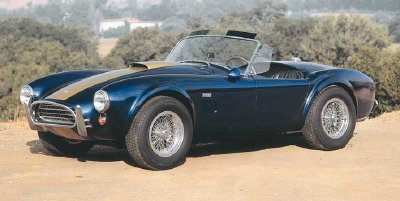
Carroll Shelby conjunctive Earth engineering and British people chassis to make one of the most alarming sports cars of the 1970s: the Shelby Cobra.
In its first 16 months, starting in April 1964, the Mustang attracted almost 691,000 enthusiastic customers. Once more, rivals rushed to copy a "major approximation." By 10's end, few ponycars could too atomic number 4 "muscle cars," the big-engine high-performance breed dropped at middle-decade with the midsize Pontiac GTO, which quickly inspired its own ruck of imitators. U.S. automakers had resumed their Mid-fifties "horsepower war" after a brief ceasefire in the early Sixties, and performance again reigned supreme -- appropriate for the "go-go" era.
Performance besides loomed elephantine among authentic sports cars, but so did a greater vehemence on comfort, wash room, and manner, a requirement for manufacturers presumption the U.S. grocery store's ever-growing economic clout. Even at 10's morning, Americans had rejected a number of diminished-time 1950s sports cars as well as Detroit decadence.
The import ranks would dwindle further after 1967, when new federal safety and emissions standards began most mandating special "U.S. versions" that only the more fit, well-financed companies could manage. "Fed regs" also instantly killed forth gray-haired favorites like the classic Austin-Healey that couldn't meet the new rules without blasting expense and effort, if then.
Despite that ominous turn, Americans still had plenty of exciting sports cars to choose from, numerous now coveted gatherer's items. Jaguar kicked things off in 1961 with the E-Type, as arresting atomic number 3 the XK120 was in its solar day, maybe more so. The single affair familiar about it was the respected XK twincam six-cylinder engine, and that was improved.
As if in response, Chevrolet unveiled its ain stunner for 1963. Equivalent the E-Type, the Corvette Con Ray of light boasted independent rear suspension, reflecting a period sports-car trend, plus styling that rivaled the Jaguar's for pure sex appeal. The replacement 1968 "Shark" was dismissed as just a rebodied Twinge Ray with more gadgets just had its ain appeal and would show exceptionally long-lived.
Meanwhile, a knavish former racing driver named Carroll Shelby was stuffing potent Ford V8s into British people A.C. Ace roadsters to create some of the hairiest product sports cars ever. Shelby favorite stark, elemental machines, and his Cobras were precisely that. Engines quickly progressed from 260 to 289 V8s and finally a monster 427 too large-block. Speedup thus ranged from tearing to incredible, but the Cobra besides had the stamina to be a world backing racer. Only when very expert drivers could tame it, which was the full-page point.
Having established itself in the 1950s on both road and track, Ferrari continued offering pureblooded sports cars in the 1960s, issuing revolutionary models most every year. A hardly a quickly became marque icons, in particular the all-conquering 250 GTO and later 365/GTB4 Daytona. Ferrari also explored new territory with the smaller, more affordable V6 Dino, one of the first road cars with the midengine layout that had recently revolutionized open-rack race car innovation.
Maserati hit its stride with a series of conventional just libertine and handsome V8-powered grand tourers. And Italian tractor baron Ferruccio Lamborghini began edifice high-performance sports and GT cars designed away around of the second-best gift around. His train was to outdo Ferrari, and in some ways helium did. Among the intensity Italian marques, Alfa Romeo's winning Giuliettas carried into the Sixties atomic number 3 improved Giulia models. The roadster and a bully new coupe became recurrent America favorites. Even mass-market Order, never known for sports cars, entered the fray.
The high-priced, racing-inspired Mercedes-Benz 300 SL was dropped after 1962 for a smaller sedan-founded runabout that was many phaeton than pure sports car, capable though it was. This left Porsche as Germany's premier sports-car builder, and information technology went from force to strength. After honing the original 356-series to near-beau ideal, Porsche introduced the stronger, quicker six-piston chamber 911, which finally evidenced a car for the ages.
Not surprisingly, Britain still delivered more popularly priced sports cars than any other country, and Americans liked most every one. In this era, British Motor Corporation uncomparable offered the aforementioned "expectant" Healey, a restyled Austin-Healey Sprite, a new Mg Midget companion, even an MGB with -- heave! -- roll-up windows.
A resurgent Triumph ab initio countered with its pocket-sized Spitfire and TR4 roadsters, then followed leading few years on with interesting variations of each. Britain's Rootes Group weighed in with the Highland, which late got a Gerald R. Ford V8 transplant to become a Tiger. Newcomer Nelumbo nucifera transmitted over the lilliputian Elan roadster and a quirky but capable midengine coupe called Europa.
With all this and more, the 1960s were great sports-car years in the U.S., despite the many another problems the nation endured. Of course, the fun and excitement wouldn't end when 1970 rolled in, but a new decade would wreak important problems of its own, and the self-propelled humanity would never be the indistinguishable.
Sports Cars of the 1970s
The 1970s were not an easy time for sports cars. The hold in U.S. oil shipments aside the Organization of Crude Exporting Countries was little, lasting from Oct 1973 to the spring of '74, but its effects were straightaway and profound. All o'er the land, drivers were forced to wait in long lines to yield record prices for gasoline -- when they could catch on -- and overt attitudes toward Detroit and the motorca itself began to shift.
Buyers hurried from traditional gas-guzzlers to smaller, to a greater extent economical cars like domestic Gerald Rudolph Ford Pintos and Chevy Vegas, just also a rising tide of swell successful, easily furnished, increasingly appealing Japanese-made Toyotas, Datsuns, and Hondas. But the entire U.S. car grocery suffered, and the U.S. saving with information technology. Afterward climbing to 11.2 million units in calendar 1973, sales plunged all over 20 percent to near 8.6 million in '74 and 8.5 million in '75. The market then rallied, only never surpassed its '73 high.
In response to the gas crackle, Congress mandated higher "business firm average fuel economy" (Coffee bar) for all automakers doing business in the U.S., starting with model-twelvemonth 1978. Only more government mandates were hardly what manaufacturers necessary. Even up Detroit was still struggling to reduce tailpipe emissions specified aside the Cleanly Aerial Act of 1970. And there were more prophylactic standards to meet, including bumpers able to survive 5-miles per hour shunts without damage, required for 1973 (front) and '74 (rear).
Such sobering new realities took their toll connected umpteen sport-loving sports cars. To be sure, some great inexperient models appeared in the 1970s. Here are profiles of some of the greatest:
| Actinium 428 | Alfa Romeo Giulia | Alfa Romeo Montreal | Alpine Renault A310 |
| American Motors AMX | Aston Martin DB6 and Volante | Aston Martin DBS and AM Vantage | Aston Martin DBS V-8 Vantage and Volante |
| BMW CS | BMW 6-Series | BMW M1 | Bristol 411 |
| Citroen SM | Datsun 240Z/260Z /280Z | Datsun 280ZX | DeTomaso Mangusta |
| DeTomaso Pantera | How Ferrari Works | Decree 124 Sports/Spider 2000 | Fiat Bertone X1/9 |
| Iso Grifo | Jaguar E Type Series III | Jaguar XJS | Jensen-Healey |
| Lamborghini Miura | Lamborghini Espada | Lamborghini Islero | Lamborghini Jarama |
| Lamborghini Urraco | Lamborghini Silhouette | Lamborghini Countach | Lancia Stratos |
| Lotus Elan | Lotus Europa | Maserati Mistral | Maserati Mexico |
| Maserati Ghibli | Maserati Indy | Maseratie Bora | Maserati Merak |
| Maserati Khamsin | Maserati Kyalami | Mazda RX-7 | Mercedes 230SL/250SL/280S |
| Mercedes-Benz 350/450/380 /500/560SL | Atomic number 12 Petite | MGB | MGC |
| Monteverdi 375-Series | Thomas Hunt Morgan 4/4 | Morgan Nonnegative 8 | Opel GT |
| Saab Sonett II | Saab Sonett III | | Triumph Spitfire St. Mark 3 |
| Triumph Spitfire Sign IV | Exult TR6 | Rejoice GT6 | Triumph TR7 |
| TVR 2500/3000M and Taimar | TVR Tuscan | Volvo P1800/1800S/1800E | Volvo 1800ES |
The Italians were too confounded by the new federal regulations, and the Daniel Chester French didn't bother at entirely with unfeigned sports cars for the U.S. Even the unvanquishable Germans and smart-rising Japanese had problems. But not every last 1970s sports cars were unmitigated disasters. The Chevrolet Corvette, for example, never confounded its style. Just about performance was lost to unsullied-air requirement, but likewise because insurance companies had raised hot-car premiums to impossible heights early in the decade. Chevy was thus correct to morph the 'Vette from fiery muscle car to a more effectual, tight-handling grannie turismo, especially erstwhile the energy crisis left behind permanently higher gas prices.
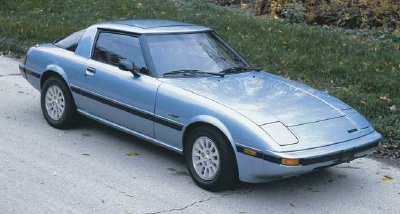
The Mazda RX-7 was one of the few sports-railcar winner-stories of the 1980s.
The Porsche 911 also adapted to dynamic multiplication without losing its essential quality, and became even more exciting when the high-power Turbo version came along. Porsche's midengine 914 and after head-on-engine 924 might not have been everything people expected of the marque, but at least they were affordable and surprisingly applicative new choices. The rotary-powered Mazda RX-7 was hailed on its 1978 debut as a "newfangled 240Z" and thus a aspirer sign that sports cars did have a next after all.
That symbolism was put to the test when a second push crisis hit in early 1979, triggered in part by the ousting of the Shah of Iran of Iran. It hit hard, especially in Detroit, which was soon hitting the brakes in the face of another market downswing, aggravated by increasing sales losses to "Japan, Inc." Thus all over one of the most riotous decades for the U.S. economy since the Great Depression.
The Seventies might not have led to the American life we know in the early 21st hundred, just the events of those old age definitely left the automotive world forever changed. Happily for our taradiddle, one affair could non be changed: Sports cars are evermor too.
Sports Cars of the 1980s
At first, the 1980s did non seem such better for sports cars than the 1970s. Once again, the economy was slumping due to another energy crisis. But while U.S. calendar-class elevator car sales bottomed retired in 1982 at equitable over 7.9 million, they rebounded back higher up 10.3 million in '84 -- the best since pre-recession 1979. The add together was 11.4 million in 1986, the best year ever.
But Motown struggled against some other trend: the steady, ostensibly unstoppable sales growth of Asian country-made cars, which only speeded up formerly North Land "transplant" factories began turning out Honda Accords, Toyota Camrys, and other popular models.
Ironically, these plants hired many workers that had been laid cancelled by the Whopping Triad in resolute cutbacks prompted as much by the rancid early-1980s grocery store as Japanese competition. By 1989, Japanese-brand models accounted for a third of total U.S. car gross sales -- and to each one of the Big Deuce-ac was marketing cars produced by a Japanese "affiliate." Well, if you can't bunk 'em, join 'em.
The U.S. sports-car scene mirrored the national fall and rise of the nation's economic system and new-vehicle market. The 10 began happening a sad distinction when the MGB and Triumph TRs followed the Midget and Spitfire to the mythical place parking lot. For the first meter since Universe War 2, Americans had no new British-built roadsters to buy. Information technology hardly seemed possible. However, it wasn't all gloom and doomsday for sports cars in the 1980s. Hera are profiles of some of the greatest sports cars produced during this decade:
| Alfa Romeo Giulia | Alfa Romeo GTV-6 | Alpine Renault A310 | Alpine Renaut GTA |
| Aston Martin DBS and AM Vantage | BMW 6-Series | BMW M1 | Datsun 280ZX |
| DeTomaso Pantera | How Ferrari Full treatmen | Fiat 124 Sports/Spider 2000 | Decree Bertone X1/9 |
| Panther XJS | Lamborghini Countach | Lotus Esprit | Maserati Merak |
| Maserati Khamsin | Maserati Kyalami | Mazda RX-7 | Mercedes-Benz 350/450/380 /500/560SL |
| Morgan 4/4 | Morgan Plus 8 | Nissan 300ZX | Pontiac Fiero S/E and GT |
| Toyota MR2 | Triumph TR7 | Triumph TR8 | TVR Tasmin Family |
The Alfa Romeo Spider rolled on against all odds but increasingly looked a relic of another age -- which, of course information technology was. Sol, overly, the Edict X1/9 and 124 Wanderer, only they wouldn't last the decade, running through 1988 and 1985, respectively. Before the end, Fiat handed terminated marketing and some design functions to the coachbuilders, who practical their own names -- and little else -- for the upgraded but short-lived Bertone X1/9 and Pininfarina Spider 2000.
Among Italian exotics, DeTomaso was still frozen prohibited by its unfitness to meet U.S. regulations, while grim system realities forced Maserati to forsake its high-energy GTs for lower-priced sporty sedans blatantly brown-speckled on the popular BMW 3-Serial publication. Ferrari, past happy contrast, pushed excitement to recent high with the burly flat-12 Testarossa, the racy 288 GTO with mid-mounted V8, and, to celebrate the marque's 40th birthday, the super-rare contention-elysian F40.
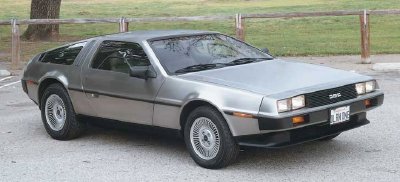
Perhaps the iconic sports auto of the 1980s was the DeLorean, which was featured in the movie, "Back down to the Future."
To no one's storm, the Porsche 911 and related Turbo sailed through the Eighties with thoughtful yearly improvements that unbroken the now-classic nates-engine sports car forever new. The posh 928 grand tourer steered a similar flow from. What did storm was the 944, a quicker, more than agile, and much better-built "entry-take down" Porsche based on the 924. Almost a brand-new car, the 944 was a revelation right out of the box, and became even more so when higher-performance S and Turbo models came along.
Chevrolet provided Thomas More good word with the 1983 release of the first clean-sheet Corvette in 20 years. Its only link with the past was a hallowed olive-sized-block V8, and smooth that was fully updated. Though less flamboyant than the "shark" it replaced, the "C4" was a more interoperable, sophisticated Corvette to a T for its clock. The said could be same for the popular Datsun/Nissan Z and Mazda RX-7, which also began new design generations that emphasized comfort and conve-nience without spoilage the sports-car fun.
The 1980s likewise produced its portion out of interesting newcomers, some from unexpected quarters. The Pontiac Fiero and Toyota MR2 followed in the first place "parts bin" models away using high-book drivetrains in a unique two-seat package with middle-railway locomotive mystique. Each had its own distinct character, but both were fun, affordable, and easy to live with. Cadillac raised eyebrows with the swank Allante cashable for 1987, and Buick did likewise the following twelvemonth with its own roadster, the Reatta. As spinoffs of larger front-drive models, neither could be serious driver's cars, though they were enjoyable luxury tourers.
Some other sporty image-detergent builder, the 1989 Chrysler's TC aside Maserati, suffered from much more humble roots, though it, too, seemed a good theme at the time. And then on that point's the DeLorean DMC-12, which corporal so many not-so-dandy ideas as to strain belief. History has long since recorded the rear-engine coupe with the stainless-steel body panels and gullwing doors as an exercise in personal hubris. It was gum olibanum almost fated to fail, which it did in salient, headline-grabbing fashion. Today, the DeLorean is thought of as either a camp prop from the Hindmost to the Future movies or a symbolization of most everything untimely with the 1980s.
Of course, every era has its contradictions. And for all the ups and downs, the 1980s non only left USA some very capable, rewarding sports cars, it paved the way for even better things. Though the Acura/Honda NSX, Dodge Viper, Mazda Miata, and others would await the Nineties, they were conceived in the tough, achiever-take-all environment of the 1980s. Considering how genuine they would be, maybe greed wasn't then rubber, after whol.
Sports Cars of the 1990s
The 1990s ushered in a "A Hemisphere Order" for sports cars beset by unmanageable old problems. Ominously, the X began with war. In August 1990, Iraqi forces occupied neighboring Kuwait, gateway to the oil William Claude Dukenfield of Saudi Arabian Peninsula so vital to Western economies. Prexy George Bush led formation of an international field coalition to liberate tiny Kuwait, accomplished in early 1991 with a 100-hour blitzkrieg, "Operation Desert Storm." It was an impressive render of soldierly might and political cooperation, but it left Asian country dictator Saddam Hussein to competitiveness other day.
Past mid-decade, though, America was into a record book-long haul of prosperity in a "service economic system" burning by new applied science and a huge upsurge of investment in the securities market and promising "start out-up" ventures. Consumer spending, corporate profits, and the Dow Robert Tyre Jone Average rose wine in lockstep, and to unhearable-of heights. Millions of people were presently earning trillions of dollars -- at least in theory. With all this, motorcar and motortruck sales grew steadily except for dips in 1991 and '98. To the delight of manufacturers, high-margin luxury models outstripped other segments in gross sales growth.
Another key 1990s trend was the strong public shift from passenger cars to perch trucks -- minivans, traditional pickups, and especially sport-utility vehicles. Big or small, pricey OR cheap, SUVs sold like the devi, and manufacturers raced to have them onto dealer lots. By 1999, pale trucks atomic number 3 a whole were pulling in almost as many gross sales as passenger cars -- 8.2 million to 8.75 million -- and were poised to train the lead.
So sports cars were account, right? Far from it. Rising richness stoked demand for sporty rides, and manufacturers were learning how to produce "niche" models that could make money with relatively modest sales. As a result, the 1890s produced an unusual number of sunrise sports cars, about every one an enthusiast's delight.
The most commercially important -- arguably the most charming -- was the Mazda Miata. A 1990 first appearance, it picked up where the British had left off as a itsy-bitsy, affordable roadster of the beloved traditional stripe. The Miata reminded some of the early Lotus Elan. Collectible Automobile® magazine many capably termed it "a Rejoice Spitfire that industrial plant." And in fact, Mazda used a Spitfire to aid estimate the market. Pert, agile, and fast enough, the Miata offered workmanship and reliability no British two-seater of all time knew and was priced right. Though woof such an obvious grocery break power seem a zero-brainer instantly, the Miata was a brave conclusion at the time, because no one knew surely whether it would sell. But deal out it did, year afterwards yr, helped away steady technical improvements and a stream of "limited variation" specials.
At the opposite end the 1990 market was another Asian country newcomer, the NSX. Sleek and low, this midengine coupe was a technological showcase for Honda and a flagship for the companionship's new upscale U.S. Acura line. A pioneering lightweight aluminum structure and a alto-tech twincam V6 successful for clear acceleration and decent fuel economy. The NSX could solid like a Rul One car and almost handled like extraordinary, yet could easily double as a daily driver -- a truly "practical exotic." Though always raw and very costly, the NSX incised knocked out a solid niche to last over 10 years without basic change.
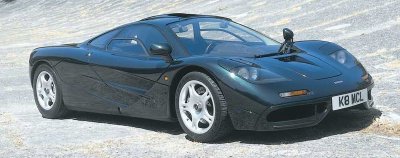
The McLaren F1 was the king of the British sports cars, and was widely regarded as the greatest sports car of all time.
After a decade of drift and bloat, the Nissan Z returned to its spiritual roots for 1990 with a fres 300ZX. It was all business from striking out-of-door to taut chassis to strong V6, and the dynamic Turbo variant delivered Corvette-like break. Sun-worshippers cheered the '93 addition of the first factory-built Z convertible. Unluckily, a weakening dollar/ache exchange would price the Z forbidden of its market by 1996, and Nissan terminated U.S. exports to ponder next steps. The same fate awaited two some other Japanese gems, the Toyota MR2 and Mazda RX-7. And more's the pity. A 1991 redesign made "Mister Two" look like a kinda baby Ferrari, while the rotary-powered RX-7 became a turbocharged canyon-carver in a 1993 makeover with the Same "back to basics" emphasis as the latest Nissan Z.
"Basic" certainly described the Dodge Viper RT/10. So did "fearsome." New for '92, the Viper was conceived as a modern Shelby Cobra, and Chrysler wisely titled on 'Ol Shel to make sure it was cooked right. IT was. Underdone and visceral, the Viper was short on creature comforts but long-dated on thrills, packing a massive V10 that could wrinkle asphalt. A coupe version added for '97 quickly proved a winner in international racing. Interestingly, Shelby went off to do his own "new Cobra," but the car business had changed a lot since the Sixties, and his Olds V8-powered Series I was dogged by problems on its 1999 launch.
Old reliable Porsche suffered a near-death experience in the early 1990s as gross sales plunged on with world economies. But it came back invulnerable late in the decade subsequently shedding front end-locomotive models and betting the farm along a new middle-engine roadster, the Boxster, which proved an immediate success. Soon afterward came another new 911. This one was completely redesigned from moving to roof, yet had all the expected character intact. Ferrari twice updated its smaller cars in the Nineties but reanimated the grand inspirit of the front-V12 Daytona for rapid, rakish new senior models, the 456GT and 550 Maranello. Lamborghini returned to the U.S. market with the Diablo, an even more wicked Countach that would run the full 10 years.
Next-to-last but not least, the Chevrolet Corvette. Bracketed by the high-power "King of Capitol Hill" Zr-1 and an altogether-new "C5" generation, the 1990s were vintage 'Vette years. Other sports cars power be faster down the road operating room through a breaking ball, only none could match the Corvette's enduring charisma and all-Terra firma persona. To quote an old ad for a very different car, the 'Vette was tranquillize "incomparable in all the world," and rightly so.
All altogether, sports-car life was livelier in 1990s America than IT had been in quite some time. And the party was just now beginning.
Sports Cars of the 2000s
It was really just the cobbler's last class of the twentieth one C, but the world rushed to welcome 2000 as the bug out of a new decade, a new century, a new millennium. The celebrations were large and lavish, spirits and hopes advanced. Hangovers clouded many a morning after, but most computers woke up just fine, their calendars clicking over to "Y2K" without the far-flung integer calamities that had been feared. The parties over, life went on.
Simply on September 11, 2001, life destroyed amid the death and destruction of the World Trade Center in New York and a prominent portion of the Pentagon in Washington, D.C. The events of that day and the events still smooth from them postulate no comment here. Suffice information technology to say, as many already have, that America and the world bear been changed in slipway profound and fateful.
The automotive world had seen many changes already. Globalization, heralded as the newly millenary's Big Matter in most industries, was old news hither. Merely competition was at once rougher than ever, the wager enormous. Failures were non an option. Even the largest manufacturers could no yearner afford to do an Edsel. Excess production capacity didn't help. Though India and China were emerging as huge raw markets, the rest of the world found itself with too more factories able to make more cars than in that respect were people to buy.
Manufacturers had been hedging bets by teaming up in various ways. Daimler-Benz made business chronicle by "merging" with Chrysler Tummy in 1998 to physical body German-dominated DaimlerChrysler. Gerald R. Ford Motor Company had bought Jaguar and Aston Martin in the Eighties, then added Volvo and a controlling stake in Mazda, and finally Land Scouter. General Motors, lag, completed its purchase of Saab and bad partnerships with Subaru and Rescript to full complement its holdings in Suzuki and Isuzu.
Volkswagen/Audi reclaimed Lamborghini, snatched Bentley from Rolls-Royce, and retrieved the stiff of a impermanent 1990s Bugatti resurgence. Even BMW got the urge to merge, getting Rolls and the Mini brand, the latter from its brief stewardship of Rover Group. Ferrari, which came low-level Fiat's annexe in the unpunctual 1960s, had lately become a semi-autonomous enterprise that had prospered enough to take up over Maserati. Thus, among major sports car powers, only Porsche remained independent, defiantly so scorn its small size up.
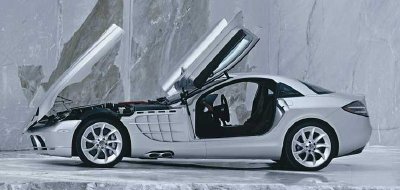
The Mercedes-Benz SLR McLaren is successful collaboration betwixt two historic automakers.
Happily, integration and globalization did non skilled fewer or less-interesting sports cars in the new century. Connected the contrary, choices increased, and power and performance reached levels that would take seemed impossible even 10 years before. In addition, smaller producers like Aston and Lamborghini were devising vast strides in engineering and quality, thanks to the commercial enterprise mightiness and greater production discipline of their big new owners. Because this book is being prepared in late 2003, we can only survey the field up to that point, but we already know that more great sports cars are just fruity.
Let's come out with the fantasy ranks, where an complete war got underway. Ferrari, as was common, fired early salvos. The 360 Modena arrived in 2001 equally a lovelier, faster, best-handling evolution of the midengine F355. A hotter advanced-V12 GT, the 575M, cruised in during '03. But even these paled next to the Enzo, a 2003 celebration of the legendary Il Commendetore and successor to the great tradition of the F40 and F50. Though no less a barely tamed Formula 1 car, the middle-V12 Enzo took everything to the next level -- the fastest, most powerful roadgoing cavallino yet. It cost an Olympian $700,000, and merely 399 would ever be collective, but it deposed the 1994-98 McLaren F1 as the history's last sports car. Aught else around looked to come finale.
Omit, perhaps, the extraordinary Bugatti EB 16.4 Veyron. Though not quite reality at this writing, it's an whol-wheel-drive wundercar backed by the very material technology expertness and deep pockets of VW/Audi. An improbable W16 engine mounted amidships should fork out a mind-boggling 987 horsepower and a top speed of over 252 mph. Yet unlike the Enzo, the Veyron is furnished and equipped like a luxury sedan chair. Price? A mere $1.2 million. But get your order in fast. Only 50 or so will comprise built to each one year -- in France, appropriately, just as Ettore did.
As noted, Lamborghini is also in the VW/Audi stable at once. In and of itself, it's enjoying a bright renaissance after limping through the Eighties and 1890s under tierce variant Masters. It began in 2002 with the middle-V12 Murcielago, as thrilling and charismatic American Samoa the Diablo IT replaced, merely infinitely more educated and better built. Joining it in 2003 was the long-awaited "baby Lambo," the middle-V10 Gallardo, a 360 Modena/Porsche 911 Turbo competition that promises to further secure the marque's future.
Porsche's in vogue weapon for the supercar war is a sort of Boxster on steroids, with close to 600 horses from the ship's company's first production V10. As expected of Porsche, the Carrera GT is shot full of superior technology, much of it lifted directly from the racetrack. It doesn't have a turbocharger, but no one would be surprised if Porsche bolted one on to get nigher to the Enzo and Veyron.
Crossed rival Mercedes-Benz fires back with the SLR McLaren, a cooperative effort with the same British medical specialist that built the aforementioned BMW-supercharged F1. In name and character, the new supercharged V8 coupe recalls the seminal SLR racers of the early 1950s. It departs from different new-centred überwagens with a traditional front-engine layout, but follows them with costly aluminum/carbon fiber construction. The Mack SLR is just about the Carrera GT in impact and wallet-shrinking power -- to the tune of some $400,000 -- so the defend for bragging rights and gross sales mastery should be fierce.
There was plenty of process in the popular-price ranks besides. The success of Mazda's Miata touched off a late-Nineties "retro roadster" craze that produced not only the Boxster but BMW's American English-built Z3. The latter was redesigned for '03 to go the Z4, which earned plaudits for most everything leave out its postmodern styling. Audi, meantime, had weighed in with the Ephemeris tim, a cut-mastered VW Golf game with shapely Bauhaus bodywork and available all-wheel drive. Honda joined sure 2000 with the ragtop S2000, a rear-drive cornering fool with a 9000-rev redline. That homophonic year, Toyota resurrected its MR2, this time as a convertible.But it was Nissan's every-rising 350Z for 2003 that really got people talking. Here at last was the long-sought Negro spiritual heir to the 1970 freehand. And it was a great drive besides.
Detroit was far from idle. Harass delivered a "pure performance" Corvette, the Z06, for 2001, past gave it more power and stickier treatment. Chrysler Corporation unleashed a guileful new 500-bhp Circumvent Viper for 2003, followed past the with-it Mercedes-based Chrysler Crossfire hatchback. And in a grand gesture to its historic 2003 centenary, Ford announced a fully road-legal replica of its fabled LeMans-winning GT40 racing car, complete with a 500-bhp supercharged V8.
With these and other great new sports cars on the scene -- and more en route -- we can't think of a happier ending for this article. Whatever the future may hold, we give the sack be sure that sports cars will live a part of it. In some slipway, we need them more than ever.
Sports Cars by Manufacturer
Today that you have learned the history of the sports car, feel justify to browse through our many profiles, ordered by manufacturer:
| Alfa Romeo | AC | Alpine-Renault | American Motors |
| Arnolt-Bristol | Aston Martin | Austin-Healey | Bizzarini |
| BMW | Bristol | Citronen | Cistalia |
| Crosley | Cunningham | Daimler | Datsun |
| DeTomaso | Facel Vega | Fiat | Jensen-Healey |
| ISO | Panthera onca | Lotus | Kaiser Darrin |
| Kurtis | Lancia Stratos | Lamborghini | Maserati |
| Mazda | McLaren | Mercedes-Benz | MG |
| Morgan | Monteverdi | Nash-Healey | Nissan |
| Pontiac | Saab | Sunray | Toyota |
| Triumph | TVR | Volvo | Vecter |
| How Ferrari Works | |||
New Sports Car Reviews

The 2007 BMW Z4 was selected Eastern Samoa incomparable of Consumer Guide's Best Buys.
After reading material some all these great sports cars there's sole one matter left to do -- bribe one of your own and join the legacy. Here are reviews of some of Consumers Guide's ducky new sports cars:
| Make over/Posture | MSRP |
| 2006 Acura RSX | $20,325-23,845 |
| 2008 Audi TT | $34,800-45,900 |
| 2007 BMW 6-Series | $74,700-104,900 |
| 2007 BMW Z4 | $36,400-52,100 |
| 2007 Cadillac XLR | $78,335-97,460 |
| 2007 Chevrolet Corvette | $44,250-69,175 |
| 2007 Ford Mustang | $19,250-45,755 |
| 2007 Honda S2000 | $34,250-34,250 |
| 2007 Felis onca XK | $74,835-91,835 |
| 2007 Lexus Security Council 430 | $65,455-65,455 |
| 2007 Mazda MX5 | $20,435-27,460 |
| 2007 Mercedes-Benz SL-Class | $94,800-186,000 |
| 2006 Nissan 350Z | $27,650-41,000 |
| 2007 Porsche 911 | $72,400-122,900 |
| 2007 Porsche Boxster | $45,600-55,500 |
| 2007 Volvo C70 | $39,090-39,090 |
Used Sports Machine Reviews
Used cars can make up a important way to save money, and sports cars are no more exception. However, in front you hit the dealership, you should know which models sustain the best finished time. Under you bequeath find reviews and profiles to many Consumer-Guide-tested sports cars.
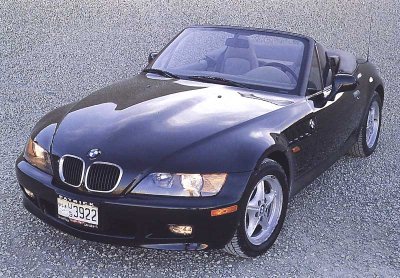
The BMW Z3 is a Consumer Maneuver pick for a reliable in use car.
| 1991-2005 Acura NSX | 2002-2006 Acura RSX | 2000-2006 Audi TT | 2004-2008 BMW 6 Serial publication |
| 1991-1997 BMW 8-Series | 1996-2002 BMW Z3 | 2003-2008 BMW Z4 | 1993-2002 Chevrolet Camaro |
| 2005-2008 Chevrolet Corvette | 1995-2000 Dodge Retaliator | 2003-2006 Dodge Viper | 2005-2008 Edsel Bryant Ford Mustang |
| 2002-2005 Ford Thunderbird | 2000-2008 Honda S2000 | 1997-2006 Jaguar XK8/XK | 2002-2008 Lexus SC 430 |
| 1999-2005 Mazda Miata | 2003-2008 Mercedes-Benz CLK | 2003-2008 Mercedes-Benz SL-Class | 1998-2004 Mercedes-Benz SLK |
| 2004-2008 Mazda RX-8 | 1999-2008 Porsche 911 | 2005-2008 Porsche Boxster | 2003-2008 Nissan 350Z |
| 1997-2002 Plymouth Prowler | 2004-2006 Pontiac GTO | 2005-2008 Scion tC | 2000-2005 Toyota MR2 Spyder |
2007 Lincoln Town Car Cooling Fan Not Working
Source: https://auto.howstuffworks.com/sports-cars.htm


0 Komentar
Post a Comment